Click to run and edit this dialog:

Sometimes we can load the material we are interested into SolveIt, using a markdown file (this is what we did with the math text books). Many times, we might not have a markdown file (or PDF that we can convert to markdown) of the material we are interested in.
The AI isn't always very helpful with some links, such as the one below :-(
Describe what you see at this link: https://www.desmos.com/3d/0uz3litln7
Let me try to fetch that page:
read_url(url="https://www.desmos.com/3d/0uz3litln7")→"Loading...\\n\\n"
}
Unfortunately, read_url wasn't able to load the Desmos content — Desmos is a JavaScript-heavy app, so all I got back was a "Loading..." placeholder and a blank pixel image. The actual 3D graph doesn't render without a full browser.
Could you paste a screenshot of the graph into a note, or describe what you see? That way I can help you work with whatever's there.
That link contains the following graphs I created using Desmos 3D graphing calculator:
You can view them here: https://www.desmos.com/3d/0uz3litln7
I'd like to ask SolveIt questions about these graphs.
Solution: capture_screen
The below code imports a capture_screen tool that will let the AI model "see" what is in another window on your computer:
from dialoghelper.capture import *

setup_share()

start_share()When you run the above code, you will be prompted to select which tab or window you want to share, or you can share your entire screen.
A banner will appear at the top of the web browser where you are running SolveIt, as well as in the tab or window that you are sharing. When we share Desmos with SolveIt, we see the banner in SolveIt:
And in Desmos:
Make sure you are using an AI model that has vision capabilities. Click the brain icon in the menu at the top and select Sonnet 5 as the reasoning model.
Then make sure that the brain is selected, so the button appears blue.
You need to tell the AI to use &capture_screen to view your screen. The ampersand (&) and backticks indicate a tool that the AI can use.
After you tell the AI once, it will know that it can use the tool for the rest of the dialog, and you don't need to mention it again!
Use the &capture_screen tool to describe what is on my screen. Focus on visuals as opposed to text.
capture_screen()→"<TRUNCATED>…=<PartType.input_image: 'inp…"
{
  "id": "toolu_01Nv3DhEjJbThB4qDxHSedQt",
  "name": "capture_screen",
  "args": {},
  "result": "<TRUNCATED>…=<PartType.input_image: 'input_image'>, text=…</TRUNCATED>"
}
Here's what I see: two saddle-shaped surfaces intersecting in 3D space, forming a striking pinwheel-like pattern. One surface is blue, the other red, and they twist through each other symmetrically around a central vertical axis.
The overall shape looks like four curved "petals" or "wings" alternating red-blue-red-blue as you go around the z-axis, each one curving up on one side and down on the other — very much like a pair of saddle surfaces rotated 90° relative to each other. Near the center, both surfaces pinch together in sharp cusps along thin curved edges, giving it a pinwheel or origami-like appearance rather than smooth rounded saddles.
Use the &capture_screen tool to describe what is on my screen. Focus on visuals as opposed to text.
Let me grab a screenshot now.
capture_screen()→"<TRUNCATED>…=<PartType.input_image: 'inp…"
{
  "id": "toolu_01QTFbBW9LyV8PFUinV1hKux",
  "name": "capture_screen",
  "args": {},
  "result": "<TRUNCATED>…=<PartType.input_image: 'input_image'>, text=…</TRUNCATED>"
}
You have Desmos open, showing two intersecting 3D surfaces rendered inside a transparent bounding cube with labeled axes. One surface is a vivid blue and the other a deep red — both are hyperbolic paraboloids (saddle shapes). They sweep through the cube in dramatically curved, wing-like forms, intersecting each other at sharp creases near the origin. The intersection creates an intricate pinwheel pattern where the two colours weave around each other, with pointed cusps radiating outward from the centre. The vertical z-axis runs up the middle, and a faint grid plane sits at the base. On the left is a narrow expression panel with two entries, and toolbar icons line the top and right edges.
Why do the equations create those shapes?
Great question! Let's start with the first surface: z = x^2 - y^2 .
The key is that two competing terms pull in opposite directions:
- Along the x-axis (where y = 0 ), it simplifies to z = x^2 — a parabola curving upward
- Along the y-axis (where x = 0 ), it simplifies to z = -y^2 — a parabola curving downward
So the surface curves up in one direction and down in the perpendicular direction — exactly like a saddle (or a Pringles chip!). That's why it's called a hyperbolic paraboloid.
The second equation y = z^2 - x^2 is the same idea, just with the variables shuffled around — so you get another saddle, but oriented along a different axis.
Does that make sense so far? If so, I can explain why they intersect the way they do.
Studying World History
I need to study world history using the material on this site: https://www.oerproject.com/World-History-AP
Please look at the text at the source URL, as well as viewing what is on my screen using the &capture_screen tool. How should I organize my studies? What content can you help me with?
Let me fetch that page and capture your screen at the same time.
read_url(url="https://www.oerproject.com/World-History…")→"<TRUNCATED>…Policy\\n\\nOur website uses c…"
{
"id": "toolu_01B5RMSAdu9yqAAZMERyXFty",
"name": "read_url",
"args": {
"url": "https://www.oerproject.com/World-History-AP"
},
"result": "<TRUNCATED>…Policy\n\nOur website uses cookies to understand content and feature usage to drive site improvements over time. To learn more, review our [Terms of Use ](/Terms-of-use)and [Privacy Policy](/Privacy-policy).\n\nAccept\n\n * [Home](/)\n * [Courses](/Courses)\n\n\n\n## On this page\n\nSkip On Page Links\n\nUnit 0: Intro to World History \n\n\nc. 8000 BCE to 1200 CE\n\nToggle Menu\n\n * [ Unit 0: Intro to World History \nc. 8000 BCE to 1200 CE ](/World-History-AP/Unit-0)\n * [ Unit 1: The Global Tapestry \nc. 1200 to 1450 CE ](/World-History-AP/Unit-1)\n * [ Unit 2: Networks of Exchange \nc. 1200 to 1450 CE ](/World-History-AP/Unit-2)\n * [ Unit 3: Land-Based Empires \nc. 1450 to 1750 CE ](/World-History-AP/Unit-3)\n * [ Unit 4: Transoceanic Interconnections \nc. 1450 to 1750 CE ](/World-History-AP/Unit-4)\n * [ Unit 5: Revolutions \nc. 1750 to 1900 CE ](/World-History-AP/Unit-5)\n * [ Unit 6: Consequences of Industrialization \nc. 1750 to 1900 CE ](/World-History-AP/Unit-6)\n * [ Unit 7: Global Conflict \nc. 1900 to the present ](/World-History-AP/Unit-7)\n * [ Unit 8: Cold War and Decolonization \nc. 1900 to the present ](/World-History-AP/Unit-8)\n * [ Unit 9: Globalization \nc. 1900 to the present ](/World-History-AP/Unit-9)\n\n\n\n[Home](/)\n\n# World History AP® \n\nShare/Embed\n\nTeaching Tools \n\nDesigned to align with the AP® World History: Modern Course and Exam Description, this comprehensive year-long course provides a cohesive approach to learning and understanding the history of the world, while simultaneously preparing students to take the AP® World History: Modern exam.\n\n[ Unit 0 • 5 Lessons Share/Embed  Intro to World History Before you begin learning about the world in 1200 CE, it’s important to know what came before this year. Learn the context you’ll need to succeed in World History AP®. ](/World-History-AP/Unit-0 \"Go to Intro to World History\") [ Unit 1 • 8 Lessons Share/Embed  The Global Tapestry Welcome to the year 1200 CE, a time of sprawling trade routes and mighty empires. A diverse collection of societies linked huge world regions across a web of interconnections. ](/World-History-AP/Unit-1 \"Go to The Global Tapestry\") [ Unit 2 • 8 Lessons Share/Embed  Networks of Exchange If the world is indeed a tapestry, then networks of exchange were the threads that wove it together. See how the merchants who roamed these routes moved goods, ideas, and diseases across continents. ](/World-History-AP/Unit-2 \"Go to Networks of Exchange\") [ Unit 3 • 5 Lessons Share/Embed  Land-Based Empires The bigger an empire gets, the more difficult it is to rule. How did the colossal land empires of the early modern period conquer and maintain their territories? Explore the expansion of empires and the administrative and religious systems used to control them. ](/World-History-AP/Unit-3 \"Go to Land-Based Empires\") [ Unit 4 • 9 Lessons Share/Embed  Transoceanic Interconnections After 1492, transoceanic voyages linked the hemispheres in sustained connection for the first time, setting the stage for an exchange that forever changed the lives of people in Afro-Eurasia and the Americas. ](/World-History-AP/Unit-4 \"Go to Transoceanic Interconnections\") [ Unit 5 • 11 Lessons Share/Embed  Revolutions Beginning in the eighteenth century, an age of revolutions shook the foundations of global power and industry. Enter an era of revolutionary ideas and innovations as new nations formed and new forms of production were created. ](/World-History-AP/Unit-5 \"Go to Revolutions\") [ Unit 6 • 9 Lessons Share/Embed  Consequences of Industrialization Industrialization fueled empires. Thanks to innovations like steamships, trains, and machine guns, industrial empires spread their borders further than ever, opening new markets and resources to fuel their factories. ](/World-History-AP/Unit-6 \"Go to Consequences of Industrialization\") [ Unit 7 • 10 Lessons Share/Embed  Global Conflict The transformations of the long nineteenth century set the stage for an era of unprecedented warfare, atrocity, and threat to our species’ survival. ](/World-History-AP/Unit-7 \"Go to Global Conflict\") [ Unit 8 • 10 Lessons Share/Embed  Cold War and Decolonization As World War II ended, new global conflicts emerg…</TRUNCATED>"
}
capture_screen()→"<TRUNCATED>…=<PartType.input_image: 'inp…"
{
  "id": "toolu_01CHXr8Hi9tA9ZcQrAvWePaB",
  "name": "capture_screen",
  "args": {},
  "result": "<TRUNCATED>…=<PartType.input_image: 'input_image'>, text=…</TRUNCATED>"
}
Both worked. The page loaded fully via read_url, and your screen shows the same course page (with a cookie banner you might want to accept/dismiss). Here's what the course contains:
World History AP® — a year-long course aligned to the AP World History: Modern exam, organized into 10 units:
| Unit | Topic | Period | Lessons |
|---|---|---|---|
| 0 | Intro to World History | c. 8000 BCE–1200 CE | 5 |
| 1 | The Global Tapestry | c. 1200–1450 | 8 |
| 2 | Networks of Exchange | c. 1200–1450 | 8 |
| 3 | Land-Based Empires | c. 1450–1750 | 5 |
| 4 | Transoceanic Interconnections | c. 1450–1750 | 9 |
| 5 | Revolutions | c. 1750–1900 | 11 |
| 6 | Consequences of Industrialization | c. 1750–1900 | 9 |
| 7 | Global Conflict | c. 1900–present | 10 |
| 8 | Cold War and Decolonization | c. 1900–present | 10 |
| 9 | Globalization | c. 1900–present | 10 |
That's 85 lessons total. The structure is chronological, with units paired by era — so a natural way to organize study is one era at a time (e.g., Units 1+2 together, then 3+4, etc.).
A few ways I can help:
- Work through units in order — fetch each unit's lesson pages, discuss the content, and quiz you as we go
- Build a study schedule — map the 85 lessons onto your available time (when's your exam, if any?)
- Focus on weak spots — if you already know some eras well, start where you're least confident
- Practice historical thinking skills — the AP exam tests skills like sourcing, causation, and comparison, not just facts
Before we pick: are you preparing for the actual AP exam, or studying for general interest? And roughly how much time per week do you want to spend?
I am studying for the actual AP exam. Let's start by focusing on Unit 5 on revolutions.
Good choice — Unit 5 (Revolutions, c. 1750–1900) is one of the meatiest units with 11 lessons. Let me pull up its lesson list.
read_url(url="https://www.oerproject.com/World-History…")→"<TRUNCATED>…Policy\\n\\nOur website uses c…"
{
"id": "toolu_01LmyFLQKYbvSAFfuF42oiDA",
"name": "read_url",
"args": {
"url": "https://www.oerproject.com/World-History-AP/Unit-5"
},
"result": "<TRUNCATED>…Policy\n\nOur website uses cookies to understand content and feature usage to drive site improvements over time. To learn more, review our [Terms of Use ](/Terms-of-use)and [Privacy Policy](/Privacy-policy).\n\nAccept\n\n * [Home](/)\n * [Courses](/Courses)\n * [World History AP®](/World-History-AP)\n\n\n\n## On this page\n\nSkip On Page Links\n\nUnit 5: Revolutions \n\n\nc. 1750 to 1900 CE\n\nToggle Menu\n\n * [ Unit 0: Intro to World History \nc. 8000 BCE to 1200 CE ](/World-History-AP/Unit-0)\n * [ Unit 1: The Global Tapestry \nc. 1200 to 1450 CE ](/World-History-AP/Unit-1)\n * [ Unit 2: Networks of Exchange \nc. 1200 to 1450 CE ](/World-History-AP/Unit-2)\n * [ Unit 3: Land-Based Empires \nc. 1450 to 1750 CE ](/World-History-AP/Unit-3)\n * [ Unit 4: Transoceanic Interconnections \nc. 1450 to 1750 CE ](/World-History-AP/Unit-4)\n * [ Unit 5: Revolutions \nc. 1750 to 1900 CE ](/World-History-AP/Unit-5)\n * [ Unit 6: Consequences of Industrialization \nc. 1750 to 1900 CE ](/World-History-AP/Unit-6)\n * [ Unit 7: Global Conflict \nc. 1900 to the present ](/World-History-AP/Unit-7)\n * [ Unit 8: Cold War and Decolonization \nc. 1900 to the present ](/World-History-AP/Unit-8)\n * [ Unit 9: Globalization \nc. 1900 to the present ](/World-History-AP/Unit-9)\n\n\n\n[World History AP®](/World-History-AP)\n\n# Unit 5: Revolutions \n\nc. 1750 to 1900 CE\n\n  Share/Embed\n\nTeaching Tools \n\nBeginning in the eighteenth century, an age of revolutions shook the foundations of global power and industry. Enter an era of revolutionary ideas and innovations as new nations formed and new forms of production were created.\n\n### \n\n[ 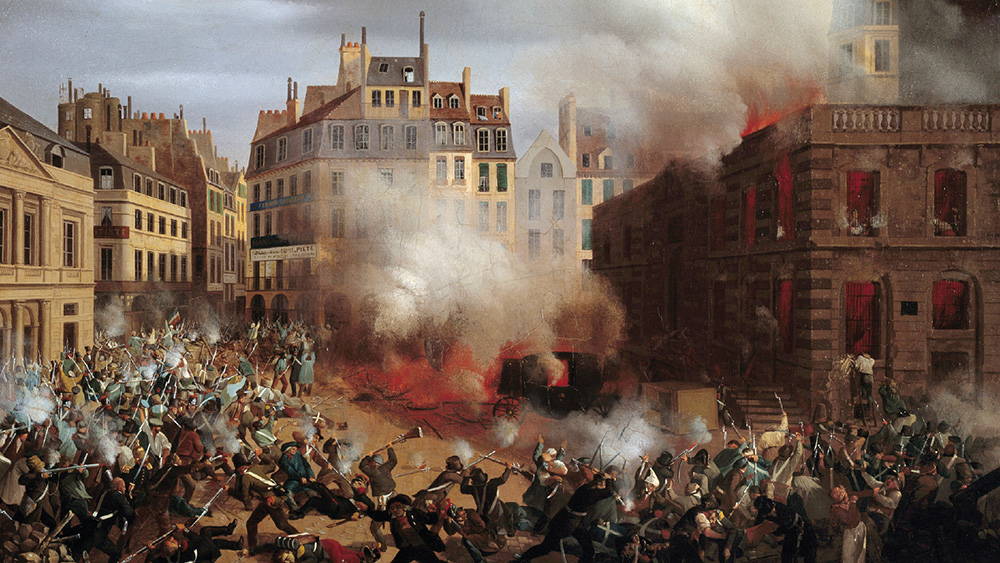 Lesson 5.0 Revolutions c. 1750 to 1900 CE Share/Embed  Revolutionary ideas challenged old power structures and promoted rights and popular government. Enlightenment thinkers helped inspire movements to build more-inclusive, just societies. ](/World-History-AP/Unit-5/Revolutions \"Go to 5.0\") [ 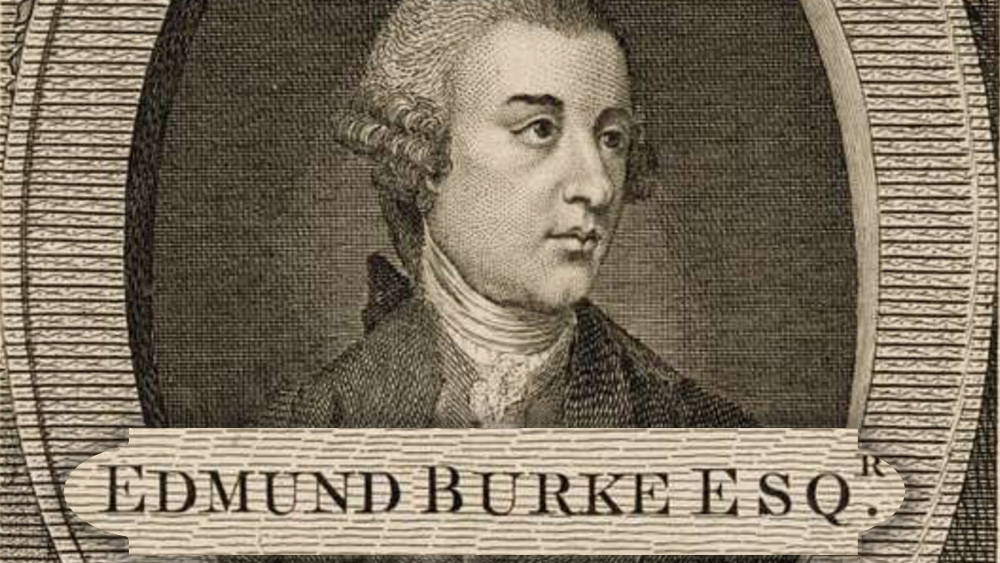 Lesson 5.1 The Enlightenment Share/Embed  The Enlightenment emphasized reason, science, and individual rights in its challenge of traditional authority. Its ideas—combined with rising taxes and food prices—inspired revolutionary movements. ](/World-History-AP/Unit-5/The-Enlightenment \"Go to 5.1\") [ 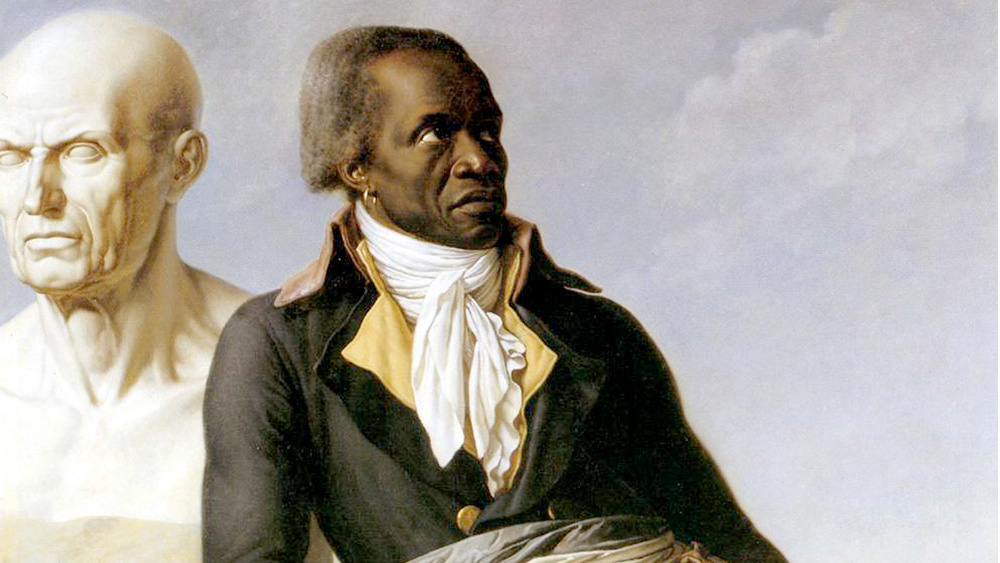 Lesson 5.2 Nationalism and Revolutions in the Period from c. 1750-1900 CE Share/Embed  A growing sense of nationalism coupled with other revolutionary ingredients produced a number of political revolutions from 1750 to 1900. ](/World-History-AP/Unit-5/Nationalism-and-Revolutions-in-the-Period-from-1750-to-1900 \"Go to 5.2\") [ 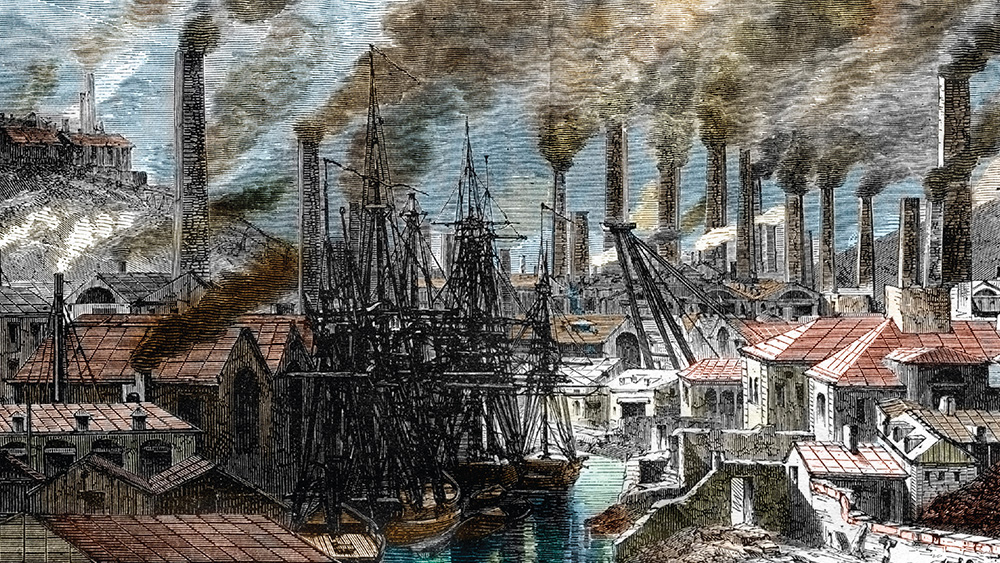 Lesson 5.3 The Industrial Revolution Begins Share/Embed  Learn how the Industrial Revolution began! It transformed economies and societies worldwide, making a lasting impact on labor, technology, and the environment that continue to shape the modern world. ](/World-History-AP/Unit-5/Industrial-Revolution-Begins \"Go to 5.3\") [  Lesson 5.4 Industrialization Spreads in the Period from 1750 to 1900 CE Share/Embed  Though it began in Britain, industrialization soon spread globally, reshaping economies and societies. Let’s examine how different regions experienced and responded to the Industrial Revolution’s expansion. ](/World-History-AP/Unit-5/Industrialization-Spreads-in-the-Period-from-1750-to-1900 \"Go to 5.4\") [  Lesson 5.5 Technology of the Industrial Age Share/Embed  Technological advancements during the Industrial Revolution revolutionized global production, trade, and daily life. Explore how economies, social structures, and communities around the world transformed. ](/World-History-AP/Unit-5/Technology-of-the-Industrial-Age \"Go…</TRUNCATED>"
}
I've got the full lesson list for Unit 5. Here's how it breaks down:
Political Revolutions (5.0–5.2)
- 5.0 — Revolutions overview
- 5.1 — The Enlightenment
- 5.2 — Nationalism and Revolutions
Industrial Revolution (5.3–5.10)
- 5.3 — The Industrial Revolution Begins
- 5.4 — Industrialization Spreads
- 5.5 — Technology of the Industrial Age
- 5.6 — Industrialization: Government's Role
- 5.7 — Economic Developments and Innovations
- 5.8 — Reactions to the Industrial Economy
- 5.9 — Society and the Industrial Age
- 5.10 — Continuity and Change in the Industrial Age
So the unit has two big themes: political revolutions (Enlightenment ideas → new nations) and the Industrial Revolution (new forms of production → social transformation).
Since you're prepping for the exam, I'd suggest we go lesson by lesson — I can pull up a lesson, we discuss the key concepts, then I quiz you on it before moving on.
Shall we start with 5.1 The Enlightenment (the intellectual roots of the whole unit), or would you prefer to begin somewhere else?
Yes, please quiz me on section 5.1
read_url(url="https://www.oerproject.com/World-History…")→"<TRUNCATED>…Policy\\n\\nOur website uses c…"
{
"id": "chatcmpl-tool-ab4bb4f267e37e62",
"name": "read_url",
"args": {
"url": "https://www.oerproject.com/World-History-AP/Unit-5/The-Enlightenment"
},
"result": "<TRUNCATED>…Policy\n\nOur website uses cookies to understand content and feature usage to drive site improvements over time. To learn more, review our [Terms of Use ](/Terms-of-use)and [Privacy Policy](/Privacy-policy).\n\nAccept\n\n * [Home](/)\n * [Courses](/Courses)\n * [World History AP®](/World-History-AP)\n * [Unit 5: Revolutions](/World-History-AP/Unit-5)\n\n\n\n## On this page\n\nSkip On Page Links\n\nLesson 5.1 \n\n\nIntroduction\n\nToggle Menu\n\n Hide menu\n\n Show Navigation\n\n * Lesson 5.1\n * 1 Opener: The Enlightenment\n * 2 The Enlightenment\n * 3 Sovereignty\n * 4 Who Benefited?\n * 5 Source Collection: Words of the Enlightenment\n * 6 Graphic Biography: Edmund Burke \n * 7 Why Was Slavery Abolished? Three Theories\n * 8 Origins and Impact of Nationalism \n * 9 Suffrage, Slavery, and Serfdom\n * 10 Closer: The Enlightenment\n\n\n\n[ Lesson 5.0 ](/World-History-AP/Unit-5/Revolutions)\n\n[ Lesson 5.2 ](/World-History-AP/Unit-5/Nationalism-and-Revolutions-in-the-Period-from-1750-to-1900)\n\n# The Enlightenment Share/Embed\n\nTeaching Tools \n\n## \n\nTeacher Resources\n\n\n\n[  Lesson Guide Hey teachers! The guide has all the essential information for this lesson. ](/Account/User-Login?returnUrl=%2fOER-Materials%2fOER-Media%2fPDFs%2fWHP-AP%2fTeacher-Resources%2fTeacher-Resources-Gated%2fLesson-5-1-Teaching-Guide \"Lesson Guide\") [  Blog: Taking a Lesson from Climate History External link Enlightenment ideas are one explanation for revolutions, but what if all the revolutions in this unit were caused by climate change? Check out the connections between revolutions and the Little Ice Age in this blog post. ](https://www.oerproject.com/blog/taking-a-lesson-from-climate-history \"Blog: Taking a Lesson from Climate History\")\n\n### Driving Question: How did intellectual and ideological movements shape the revolutions that swept the Atlantic world from 1750 to 1900 CE?\n\nThe Enlightenment was a cultural and intellectual movement in Europe during the late 1600s that emphasized reason, science, and individual rights. Thinkers during this time questioned traditional authority and believed intellectual thought and reason could improve all areas of life. Their ideas about freedom, equality, and government helped inspire revolutions in the late 1700s. However, rising taxes and food prices also pushed people to take action and demand change.\n\n### Learning Objectives\n\n 1. Explain the intellectual and ideological context in which revolutions swept the Atlantic world from 1750 to 1900 CE.\n 2. Explain how the Enlightenment affected societies over time.\n 3. Use graphic biographies to support, extend, or challenge the overarching narratives from this region. \n 4. Analyze primary source documents to evaluate the intellectual and ideological causes of political revolutions from c. 1750 to 1900 CE.\n\n\n\n### Vocab Terms:\n\n * abolish \n * conservative \n * gender \n * nationalism \n * nation-state \n * reform \n * suffrage \n\n\n\nSTEP 1 \n\n## Opener: The Enlightenment \n\nShare/Embed\n\nTeaching Tools \n\nTeaching Tools\n\nThis activity asks students to make connections between quotes from Enlightenment sources and current events. If your students need some help making these connections, check out [this community conversation External link ](https://community.oerproject.com/f/world-history/12736/enlightenment-quotes-activity-extension-possibility) for ideas, such as podcast recommendations, providing case studies, and incorporating daily hashtags into the classroom.\n\nWords have a power that can transcend time. Review these excerpts from famous Enlightenment writers—you might be surprised at how relevant many of their thoughts still are today. \n\n[   Opener Enlightenment Quotes External link Analyzing quotes from Enlightenment thinkers not only helps us understand their moment in time, it also helps us see how Enlightenment ideas impact the world today. ](/OER-Materials/OER-Media/PDFs/WHP-AP/Unit5/Enlightenment-Quotes?&lsid=bbcd58d2-e0d4-4212-b0a9-ba57d3964253)\n\nDownload or save an editable version \n\nSTEP 2 \n\n## The Enlightenment \n\nShare/Embed\n\nIn what way was The Enlightenment enlightening for people? What were the ideas that helped society progress further? \n\n### Guiding Questions\n\nCopy Text\n\n \n\n### Before you read\n\nPreview the questions below, and t…</TRUNCATED>"
}
I've pulled the full lesson. It covers a lot of ground — the Enlightenment's core ideas, popular sovereignty, the limits of who benefited, abolition of slavery, nationalism, and suffrage/serfdom reform.
Let's start with a few questions. Answer in your own words — no need for perfect sentences:
Q1: The Enlightenment emphasized three big things as alternatives to traditional authority. What were they?
Q2: What is "popular sovereignty," and why might it be a double-edged sword (i.e., how could it help some people while leaving others out)?
Q3: The lesson presents three theories for why slavery was abolished. Can you name or describe any of them?
Take your best shot — even partial answers are fine.
assert 'ANKI_USER' in os.environ, "ANKI_USER secret is not set"
assert 'ANKI_PASS' in os.environ, "ANKI_PASS secret is not set"
sync(user=user, passw=passw)'noChanges'Could you suggest some Anki flashcards about section 5.1?
Here are a few cards to start with, following the one-fact-per-card principle:
Card 1
- Front: What three things did the Enlightenment emphasize as alternatives to traditional authority?
- Back: Reason, science, and individual rights.
Card 2
- Front: What is popular sovereignty?
- Back: The idea that the authority of government comes from the consent of the people.
Card 3
- Front: What time period does the Enlightenment refer to, and where was it centered?
- Back: Late 1600s onward, centered in Europe.
Card 4
- Front: Besides Enlightenment ideas, what practical factors also pushed people toward revolution in the late 1700s?
- Back: Rising taxes and food prices.
What do you think — want me to add these, tweak any of them, or should I suggest more cards on other parts of the lesson (sovereignty, abolition theories, nationalism, suffrage)?
Once you are done using capture screen, remember to turn off the brain button (so it appears white again). This is to set the AI to a cheaper, text-based model.